
 Get a Quote
 Send Inquiry
Disc Spring
Price 5 INR/ Piece
MOQ : 100 Pieces
Disc Spring Specification
- Style
- Spiral
- Usage
- Industrial
- Load Type
- Compression
- Size
- M3 TO M30
- Material
- Carbon Steel
- Surface Finish
- Phosphated, Zink Flake Coated, Polished
- Color
- Black
Disc Spring Trade Information
- Minimum Order Quantity
- 100 Pieces
- Main Domestic Market
- n, , A, I, d, a, ', ], ', l, [, l, i
Disc Spring About
Advantages of Disc Spring Washer
- Wide range of load deflection characteristics such as straight line, progressive and regressive.
- Flexibility in stack arrangement in order to achieve a desired performance.
- Stock is minimized as the individual spring sizes can be combined universally.
- Space saving and self damping (especially when stacked in parallel).
- No Deformation or Fatigue under normal loads. Longer fatigue life.
- Simplified inventory, an individual spring size can be used for a wide range of applications.
- High Energy Storage Capacity.
- Largely Self-damping, giving good shock absorption and energy dissipation.
- Efficient use of space and high spring force with small deflections.
- Adaptable to stacking in numerous configurations.
- Combination use as a modular spring element.
- Low maintenance cost and Long Service Life.
Premium Material Selection
Our disc springs are crafted using top-grade alloys-including high-carbon chromium and stainless steels like 50CrV4, 51CrV4, SS301, SS304, SS316, as well as advanced alloys such as 17-7PH, Inconel X-718, and Inconel X-750. Each material is chosen for its specific strength, temperature tolerance, and corrosion resistance, offering tailored solutions for varied industrial applications.
Accurate Manufacturing and Export Capabilities
With extensive manufacturing expertise, we produce disc springs in strict accordance with global standards, ensuring exceptional quality and performance. As reliable exporters and suppliers based in India, we efficiently serve both domestic and international markets, supporting industries from automotive and aerospace to petrochemicals and power generation.
Versatile Applications & Usage
These disc springs can be used in clutches, valves, vibration dampers, and safety devices. They are ideal for applications requiring high load-bearing capacity within a compact design. The inherent flexibility and resilience of these springs make them invaluable in absorbing shocks, compensating for thermal expansion, and distributing loads evenly.
FAQ's of Disc Spring:
Q: How are disc springs manufactured using materials like 50CrV4, SS316, and Inconel alloys?
A: Disc springs are produced by precision forming and heat-treating selected materials such as 50CrV4, SS316, and Inconel alloys. This process includes cutting and shaping the material, followed by careful hardening and tempering to achieve the desired strength, elasticity, and fatigue resistance.Q: What applications benefit most from using disc springs made from 17-7PH or Inconel X-750?
A: Disc springs made from 17-7PH or Inconel X-750 are highly suitable for environments requiring superior corrosion resistance, high temperature stability, and exceptional fatigue life-such as aerospace, chemical processing, power plants, and offshore industries.Q: When should I choose a stainless steel disc spring like SS304 or SS316 over carbon steel options?
A: Stainless steel disc springs such as SS304 or SS316 are preferred when the operating environment presents high humidity, corrosive elements, or food-grade conditions. They ensure longer service life without significant maintenance compared to carbon steel alternatives in these circumstances.Q: Where can your disc springs be supplied and what is your export range?
A: As a leading manufacturer and supplier based in India, we export disc springs globally to numerous countries across Asia, Europe, the Americas, and the Middle East. We can deliver both standard and customized disc springs for a wide array of industrial applications worldwide.Q: What is the typical process for selecting a disc spring suitable for specific load and deflection requirements?
A: Selection involves considering the load capacity, deflection, operating environment, and material properties. Technical consultations and calculations are performed to match the disc spring's characteristics-such as thickness, diameter, and material type-with the application's unique constraints.Q: How do disc springs improve system reliability and performance?
A: Disc springs efficiently absorb vibrations, compensate for thermal expansions, and provide consistent force, minimizing mechanical wear and enhancing system stability. Their robust design also enables longevity, cost efficiency, and reduced downtime in mechanical assemblies.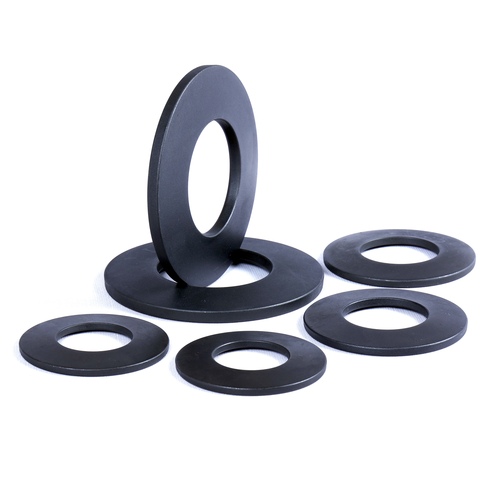
Tell us about your requirement

Price:
Quantity
Select Unit
- 50
- 100
- 200
- 250
- 500
- 1000+
Additional detail
Mobile number
Email


Contact Details

- Plot No. 15, Gidc Phase 1, Ambawadi, Wadhwan, Surendranagar - 363035, Gujarat, India
- Phone : 08045815392
UMA SPRING PVT. LTD.
GST : 24AABCU5634J1ZA

- Mr Divyesh Patel (Director)
- Mobile : 08045815392
- Send Inquiry
 Send Inquiry
 Send Inquiry
 Send SMS
UMA SPRING PVT. LTD.
All Rights Reserved.(Terms of Use)
Developed and Managed by Infocom Network Private Limited.
Developed and Managed by Infocom Network Private Limited.


